Mourinho Messi retirement tribute celebrates Lionel Messi’s unforgettable Argentina career after the 39-year-old announced his international farewell
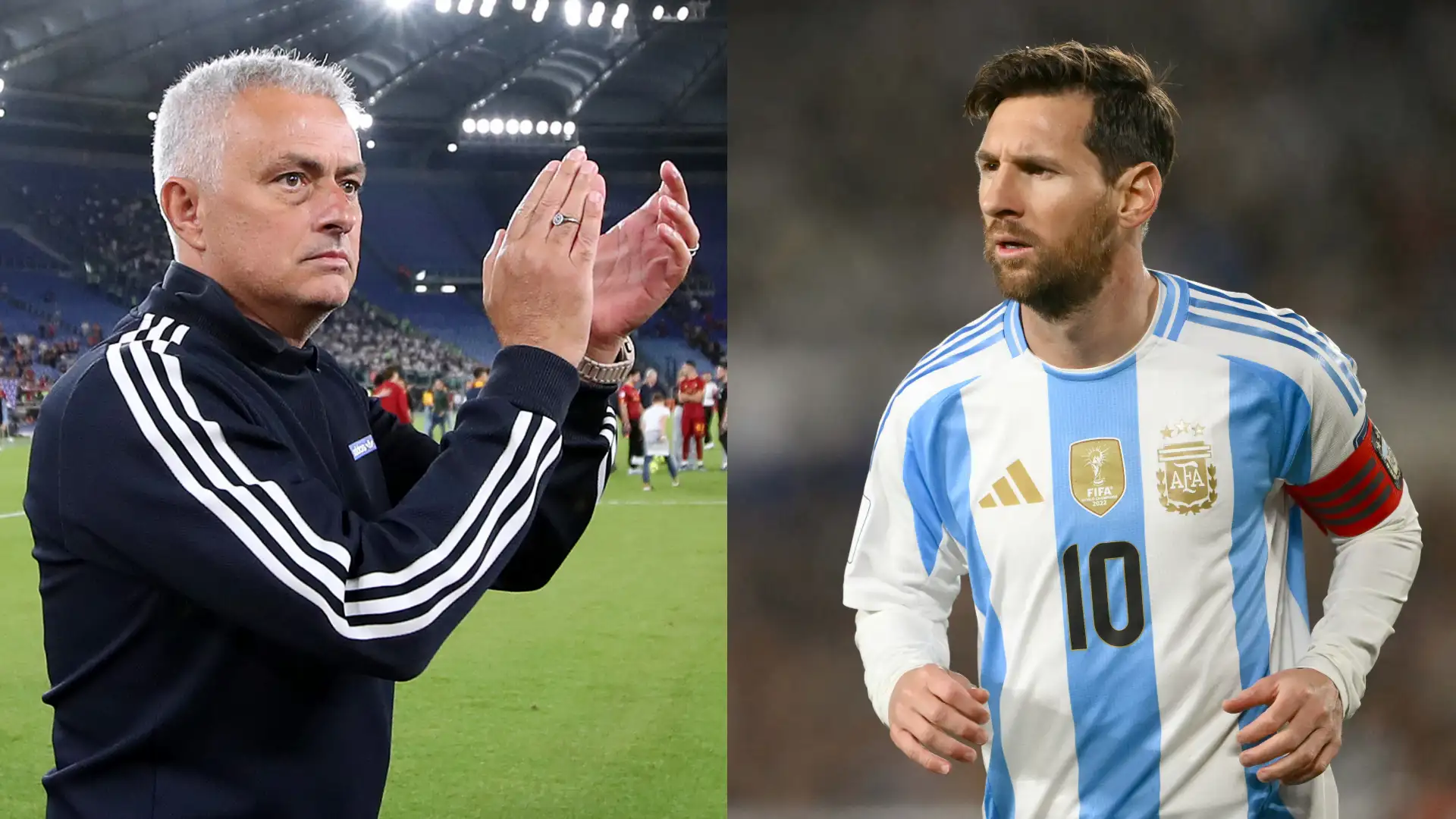
José Mourinho, Real Madrid manager, has paid an emotional tribute to Lionel Messi after the 39-year-old Argentina captain announced his retirement from international football following a decorated 21-year career with the national team.
Mourinho responded to Messi’s retirement announcement with a message posted beneath the Argentine’s Instagram statement, praising the forward’s extraordinary contribution to international football.
“Congratulations on a wonderful and unforgettable international career,” Mourinho wrote.
“The next Copa America and the next World Cup will not be the same in your absence as they were before.”
The tribute carried particular resonance given Mourinho’s long history in Spanish football.
Although Mourinho never managed Messi directly, the Portuguese coach repeatedly faced the Argentine during his time in charge of Real Madrid, when Messi was the attacking symbol of fierce Barcelona-Real Madrid rivalry.
Mourinho is now back at the Santiago Bernabéu after Real Madrid appointed him in June 2026 on a three-year contract running until June 2029.
His latest comments also reflect the respect he has publicly expressed for Messi as one of the players who defined modern football.
Speaking to reporters before Messi’s retirement announcement, Mourinho had already included Messi among the elite players whose absence would eventually be deeply felt by football.
“I miss Maradona, Ronaldinho, Ronaldo, Cristiano, Messi, Zizou, Lothar Matthäus,” Mourinho said during a Real Madrid press conference on August 29.
Messi announced his international retirement on Monday after more than two decades representing Argentina.
The decision followed Argentina’s defeat by Spain in the 2026 World Cup final, when the South Americans lost 1-0 after extra time.
Messi had helped Argentina reach the final four years after leading the country to the World Cup title in Qatar.
The announcement also came weeks after the death of Messi’s father, Jorge Messi, aged 68.
Reports say Messi had written his retirement message shortly after the World Cup final but became more convinced about the decision following his father’s death.
“It was a decision that hurt and still hurts deep down, but I understand that the time has come,” Messi wrote in his farewell message.
Messi leaves international football as Argentina’s record appearance-maker and leading scorer, with 207 appearances and 125 goals.
His Argentina career began in 2005 and ultimately developed into one of football’s most remarkable international redemption stories.
For years, Messi endured painful defeats with Argentina, including losses in the 2014 World Cup final and the 2015 and 2016 Copa América finals.
He briefly announced his international retirement in 2016 before reversing the decision and returning to the national team.
The comeback transformed the final chapter of his international career.
Messi captained Argentina to the 2021 Copa América, their first major senior international trophy in 28 years, before leading the team to victory at the 2022 World Cup.
Argentina then won another Copa América in 2024, giving Messi a remarkable run of major international success after years of disappointment.
The 2026 World Cup provided one final major stage.
Argentina reached the final again, with Messi playing in his sixth World Cup.
The defeat by Spain prevented him from ending his international career with another world title, but it did little to diminish the scale of his contribution to the national side.
FIFA described his latest departure as his second and final farewell to Argentina, noting that the 2026 final was played at the same New York New Jersey Stadium where Messi had suffered one of the most painful moments of his earlier international career in 2016.
That symmetry added another emotional layer to the end of his international journey.
Messi’s decision does not mean the end of his playing career.
The Argentine is expected to continue playing club football with Inter Miami in Major League Soccer, where he remains under contract through 2028.
For Argentina, however, the departure marks the end of an era.
Messi leaves as the country’s most prolific scorer and most-capped player, having scored 125 goals in 207 appearances.
His 21 World Cup goals also rank him among the tournament’s greatest scorers.
For Mourinho, who has spent much of his career operating on the opposite side of football’s biggest rivalries, the message was therefore more than a routine congratulation.
It was an acknowledgement from one of football’s most celebrated managers that the international game is losing one of its defining figures.
The next Copa América and World Cup will offer Argentina an opportunity to begin a new chapter with younger players, but replacing Messi’s influence, leadership and extraordinary record will be one of the country’s biggest challenges.
As Mourinho put it, those tournaments simply “will not be the same” without him.
After more than 20 years, countless records and a long-awaited collection of international trophies, Messi leaves Argentina with a legacy that has moved well beyond statistics.
He departs not only as a champion, but as the player who helped turn one of the most difficult international stories in modern football into one of its most unforgettable.











 news1 year ago
 politics1 year ago
 entertainment1 year ago
 entertainment1 year ago
 politics1 year ago
 politics1 year ago
 events2 years ago
 events2 years ago