Connect with us

Opinion

Abolish state of origin: A prerequisite for true national integration

Published

on

state of origin

By Nosa Ota Osaikhuiwu,

Nigeria stands at a critical point in its national development. Nearly sixty-six years after independence, our nation continues to struggle with divisions rooted in ethnicity, tribalism, and the outdated concept of “state of origin.”

Advertisement

Also read: Mbappé Breaks Klose Record, Leads Messi in Golden Boot Race

If Nigeria is to become a truly united and prosperous nation, we must fundamentally rethink how citizenship is defined and practiced.

One of the greatest obstacles to national unity is the continued emphasis on state of origin rather than state of residence. Every Nigerian is first and foremost a citizen of Nigeria.

Yet our laws, government policies, and administrative procedures continue to classify citizens according to ancestral origin instead of where they actually live, work, pay taxes, and contribute to society.

Advertisement

It is time for the National Assembly to enact legislation abolishing the use of state of origin and replacing it with state or local government of residence for all official government purposes.

Equal Citizenship Through Residency

The proposed legislation should clearly define residency requirements.

Advertisement

Once a Nigerian has legally resided in a state or local government for a specified number of years and has fulfilled obligations such as tax payment and other civic responsibilities, that individual should enjoy the same rights, privileges, opportunities, and responsibilities as any indigene of that community.

No Nigerian should remain a perpetual “stranger” in any part of the country where they have chosen to build their lives.

Such rights should include:

Advertisement
  • Equal access to public employment.
  • Eligibility for admissions into educational institutions.
  • The right to vote and be voted for where they reside.
  • Equal access to government services and social benefits.
  • The right to own property without discrimination.
  • Full participation in local political and economic life.


Ending Institutionalized Tribalism

The present system unintentionally encourages tribal loyalty over national citizenship. Rather than identifying primarily as Nigerians, many citizens first identify with their ancestral states because government policies reward those classifications.

As a result, national discussions frequently become contests over which state or ethnic group benefits most from federal appointments, infrastructure projects, or public resources instead of focusing on what best serves Nigeria as a whole.

Advertisement

Replacing state of origin with state of residence would gradually change this mindset by encouraging Nigerians to invest emotionally, economically, and politically in the communities where they actually live.

Better Planning and Fairer Resource Allocation

This reform would also improve national planning. Today, millions of Nigerians live permanently outside their ancestral states.

Advertisement

Yet many official records continue to associate them with their states of origin rather than their places of residence. For example, a state may officially have twenty million people by origin, while only ten million actually reside there.

Meanwhile, another state may receive ten million migrants who require roads, hospitals, schools, housing, water, electricity, and other public services, but existing policies will not adequately recognize snd compensate for this situation.

Government planning should reflect where people actually live, not where their ancestors came from.

Advertisement

Using residence as the basis for census data, budgeting, infrastructure development, healthcare planning, educational investments, and revenue allocation would produce more accurate statistics and more efficient public spending.

Promoting National Unity

Many prominent Nigerians were born outside their ancestral states. Nevertheless, our current administrative system compels them to identify only with their ancestral origins. Nigeria should move beyond this outdated arrangement.

Advertisement

Citizenship should be based upon commitment to one’s community of residence rather than ancestry.

This reform would promote:

  • National integration.
  • Social cohesion.
  • Equal opportunity.
  • Economic mobility.
  • Meritocracy.
  • Reduced ethnic tension.
  • Stronger democratic participation.

It would also encourage Nigerians to see every part of the country as home rather than limiting their identity to ancestral boundaries.

A Call to the National Assembly

Advertisement

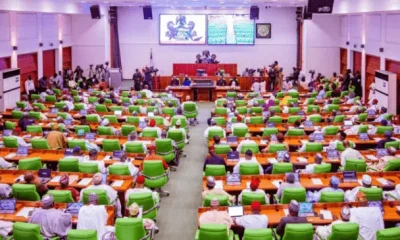
As members of the National Assembly return to legislative business, we urge them to make this constitutional and legislative reform a national priority.

The use of state of origin in official documentation, public employment, educational admissions, and government programmes should be gradually phased out and replaced with state or local government of residence.

Nigeria belongs to all Nigerians.

Advertisement

Our laws should reflect that simple but powerful truth by promoting equal citizenship, national unity, and shared responsibility rather than perpetuating divisions based on ancestral origin.

If we truly desire one united Nigeria, then every Nigerian must have the freedom to live, work, participate, and prosper in any part of the country without discrimination.

Replacing state of origin with state of residence would be one of the boldest and most transformative reforms in Nigeria’s democratic history.

Advertisement

It would move our nation closer to the promise of equal citizenship envisioned in our Constitution and help build a stronger, more united Federal Republic where every Nigerian is at home anywhere in Nigeria.

Also read: Madugu Targets Strong WAFCON Title Defence for Super Falcons

Finally, I urge all Nigerians irrespective of their places of origin to join this call and reach to their representatives, senators, governors and indeed the president through phone calls, letters and online to support this initiative for true national integration and cohesion.

Advertisement
Continue Reading
Advertisement
Click to comment

Leave a Reply

Your email address will not be published. Required fields are marked *

Opinion

Seven prime ministers in a decade: What Nigeria can learn from Britain’s chaos

Published

on

Prime Minister

By Dr Toju Ogbe,

The resignation of British Prime Minister Keir Starmer, less than two years after leading the Labour Party to  a landslide electoral victory, was dramatic, yet reflected a pattern we have become familiar with in recent British politics.

Advertisement

Also read: Abolish state of origin: A prerequisite for true national integration

Starmer now joins a procession of fallen prime ministers stretching back to 2016 – from David Cameron to Theresa May, Boris Johnson, Liz Truss, and Rishi Sunak.

None of these prime ministers was ousted through military intervention, popular insurrection, or a court order. Rather, each was ultimately brought down by the same political system that elevated them to electoral glory.

To the casual observer, the rapid turnover of British Prime Ministers in the last decade may appear chaotic, or even a symptom of political instability. Some argue that the British electorate has become ungovernable.

Advertisement

However, beneath the apparent chaos at Westminster lies an uncomfortable truth that African democracies would do well to examine, particularly Nigerians who wonder why our democracy has delivered so little despite almost three decades of uninterrupted civilian rule.

The turbulence of British politics over the last decade, presents an important lesson on democratic accountability beyond successful elections.

Once the prime minister is deemed a liability by their own political party, the mechanics of accountability are activated. The daggers are quietly drawn and the ruthless pressure to resign begins.

Advertisement

Every poll and survey on public opinion is closely monitored, local election results are taken as a referendum on leadership. Cabinet resignations begin to gain momentum and backbenchers get restless.

Once the news media smells an internal uprising, they amplify scrutiny of the prime minister, subjecting every move – speech, public appearance, political misstep etc to relentless examination.

Pressure gradually mounts until the prospect of bitter internal leadership challenge becomes impossible to resist. The Prime Minister falls.

Advertisement

For every British Prime Minister, winning an election is merely the beginning of examination, not the end. Political survival lasts only for as long as the prime minister maintains the confidence of his party and the parliament.

This is the muscle of British democratic accountability; a political culture that prioritises institutional survival over individual ambition. Starmer recognised this reality in his resignation speech:

“The question my party is asking now is whether I am best placed to lead us into the next general election. I have heard the answer of my parliamentary party to that question, and I accept that answer with good grace.”

Advertisement

That closing sentence alone is a masterclass in British institutional democracy. The party spoke. The leader listened. The correction comes from within.


Nigeria presents a strikingly different political logic.

Advertisement

Nigeria on the other hand, presents an interesting contrast with a different political logic and culture.

The notion that a governing party would overtly interrogate the performance of its own leader and engineer a transition to someone better equipped to maintain public confidence, is in most cases politically unthinkable in Nigeria.

Political parties in Nigeria do not coalesce  around ideological principles; rather, they operate more as electoral instruments organised around powerful individuals.

Advertisement

Internal dissent is often dealt with as betrayals rather than as part of healthy democratic engagement. Godfatherism and transactional loyalties shape political succession and leadership retention.

Once elected in Nigeria, there is an inherent assumption that a governor or president has a fixed two-term lease on power.

While 10 Downing Street is preparing to welcome its seventh Prime Minister in a decade, Nigeria, in contrast, has had only two democratically elected presidents during the same period – one of whom is still serving.

Advertisement

Social and economic conditions may deteriorate. Insecurity may worsen. Campaign promises may be ignored.

Public frustrations may become unbearable. Yet, incumbent governors and presidents often remain insulated from meaningful internal scrutiny and are even routinely anointed as ‘consensus’ candidate for second terms provided loyalties to godfathers, rather than the electorates are maintained.

The consequence is that loyalty, instead of performance is often rewarded at the expense of accountability.

Advertisement

This is not an argument for a revolving door at Aso Rock, as frequent leadership changes, by themselves, do not guarantee good governance.

Rather it is a case for making accountability an integral aspect of party politics in Nigeria.

Although the Nigerian presidential system provides for a fixed four-year term regardless of party confidence, political parties should however, be more than instruments for election campaigns, activated to simply retain or take over power every four years.

Advertisement

Electoral victory, should not be the ultimate goal, but the starting point of public service where democratic legitimacy must be continuously earned.

Equally important, political parties must develop the institutional maturity to honestly evaluate their own leaders. They must prioritise public interest and institutional credibility over loyalty to ‘Godfathers’.

The ultimate lesson from Westminster’s revolving door is clear: the true strength of a democratic system, lies not in the ability to produce leaders, but the capacity to effectively replace them, when they no longer command confidence.

Advertisement

Protecting failing leaders from accountability weakens democracy and political parties must ensure that no leader is more powerful than the institution.

Also read: Madugu Targets Strong WAFCON Title Defence for Super Falcons

As political parties gear up for the 2027 general elections, the political class must decide what matters more: we can continue to reward blind loyalty and endure predictable decline, or discover the courage to demand accountability from those who seek to lead us.

Advertisement
Continue Reading

Trending