Dangote targets fuel independence for Africa by 2030 as his planned 700,000-bpd Kenya refinery advances despite legal and environmental concerns
Aliko Dangote, President of Dangote Industries Limited, says Africa could become largely self-sufficient in refined petroleum products by 2030 as his proposed $16 billion, 700,000-barrel-per-day refinery in Lamu, Kenya, moves towards construction.
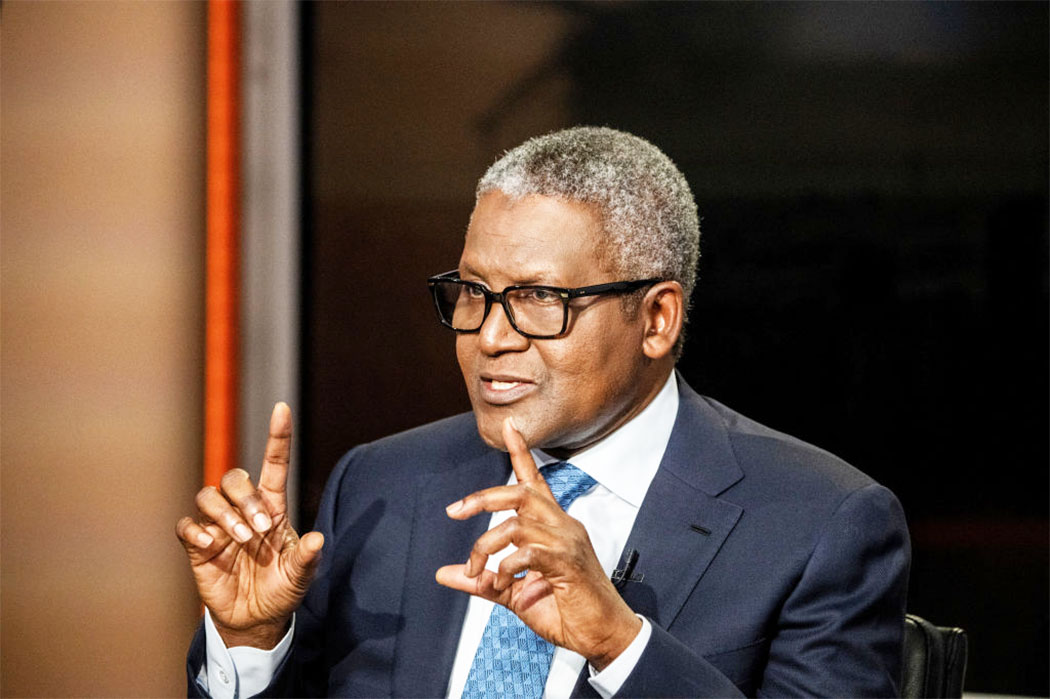
Dangote made the projection in Nairobi ahead of the planned groundbreaking ceremony for the East Africa refinery, arguing that the continent needs to move beyond exporting raw materials and importing finished products.
“By 2030, the majority of African countries will be self-sufficient. It does not matter where it is refined, but it should be in the African continent, on the soil of Africa,” Dangote said.
The proposed refinery is expected to take about three years to build and is designed to supply Kenya and other East African markets while creating additional capacity for international exports.
Preparations for the September 30 groundbreaking have intensified, with heavy construction equipment already delivered to Lamu Port.
The project is expected to become one of Africa’s largest refining developments, with a planned capacity of 700,000 barrels of crude oil per day.
Engineers India Limited has also secured a contract worth more than $450 million to provide project management and oversee engineering, procurement and construction activities.
Dangote described the refinery’s planned capacity as substantial for East Africa but relatively small compared with the continent’s longer-term fuel requirements.
“When you talk about 700,000 barrels per day, it’s actually small. For the region, it’s a big refinery, a big investment, but it is a start-up,” he said.
The Nigerian businessman said the project would not be limited to refining. He envisaged the development of industries around the facility, creating an industrial cluster capable of supporting wider economic activity.
“This refinery is not all we are going to do there. It’s just the start,” Dangote said.
The proposed development also reflects Dangote’s broader strategy of expanding refining and industrial capacity across Africa.
His 650,000-barrel-per-day refinery in Lagos has already become a major part of Nigeria’s downstream petroleum sector, while plans are under way to increase its capacity substantially.
The Kenyan project, however, faces several challenges before its long-term ambitions can be realised.
One of the most important is crude supply. Kenya does not currently have a mature commercial-scale crude production system capable of supplying a refinery of this size.
Dangote said the Lamu facility would therefore source crude from several locations, including the Middle East and the United States, while remaining open to supplies from African producers as regional production expands.
That dependence on imported crude means the refinery could reduce East Africa’s need to import refined petroleum products without completely shielding the region from international oil prices, shipping costs and geopolitical disruptions.
Reuters has also highlighted the need for supporting infrastructure around Lamu, including storage and crude-handling facilities.
The project has also attracted legal and environmental scrutiny.
A Kenyan court has issued an order affecting activities at the proposed site following a land-rights challenge by local residents.
Dangote Industries has maintained that the legal development will not prevent the scheduled groundbreaking, although it could affect some activities at the site.
Environmental campaigners have separately raised concerns about the possible effects of a refinery of this scale on Lamu’s coastal ecosystems.
Greenpeace Africa has warned about potential risks to mangroves, coral reefs, seagrass beds, fisheries and other local livelihoods.
Dangote rejected the suggestion that such concerns would derail the project.
“There’s actually no problem with these sorts of cases,” he said, adding that there were people who opposed development in Africa.
For Kenya, the proposed refinery could have significant economic implications.
Petroleum products are a major component of the country’s import bill, and a large domestic refining facility could reduce the need to bring finished fuels into the country while supporting regional supply.
The wider plan is also intended to serve neighbouring markets. The refinery is expected to connect with broader East African trade and transport infrastructure, potentially supplying countries that rely heavily on imported petroleum products.
Dangote has argued that the bigger challenge for Africa is not simply the availability of natural resources, but the continent’s limited ability to process those resources locally.
“The biggest problem is that we export raw materials at maybe 5 to 10 per cent of its value, and then we end up buying at 100 per cent of their value,” he said.
He added that exporting raw materials also meant exporting employment opportunities, while importing finished products effectively transferred more economic value outside the continent.
The proposed Kenyan refinery comes as Dangote simultaneously seeks to expand his Nigerian refining operations.
The Dangote Lagos refinery has launched a $1.6 billion initial public offering intended to help fund an expansion that would significantly increase its capacity.
The two projects illustrate the scale of Dangote’s ambitions in Africa’s energy sector, but they also carry different challenges.
While Nigeria has substantial crude production, Kenya’s proposed Lamu refinery will initially need to rely considerably on imported feedstock.
The Lamu project is therefore more than a refinery construction exercise. Its eventual success will depend on reliable crude supplies, supporting infrastructure, financing, regional demand, environmental safeguards and the resolution of outstanding community and legal concerns.
For Dangote, the ambition is clear: build sufficient refining capacity on African soil to reduce the continent’s dependence on imported fuel and retain more of the value generated from its natural resources.
Whether that ambition can be translated into broad fuel independence by 2030 will depend on how quickly projects such as Lamu progress and how effectively African countries address the infrastructure, investment and supply-chain gaps surrounding them.




 news1 year ago
 politics1 year ago
 entertainment1 year ago
 entertainment1 year ago
 politics2 years ago
 politics1 year ago
 events2 years ago
 events2 years ago